
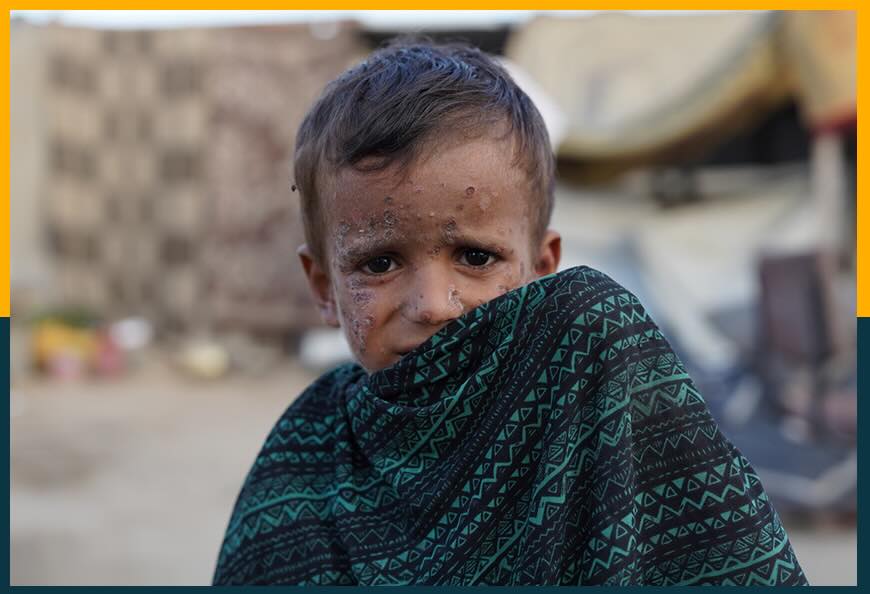
In overcrowded displacement camps and shelters across the Gaza Strip, a serious health crisis is unfolding, threatening the lives of thousands of children.
As humanitarian conditions continue to deteriorate and even the most basic necessities remain out of reach, smallpox is spreading rapidly among children, fuelled by a severe shortage of clean water, medicines and healthcare.
Extreme overcrowding inside shelters is one of the primary drivers of the outbreak. Dozens of families are forced to live in confined spaces, with more than twenty people sometimes sharing a single room.
In such conditions, infection spreads quickly, especially as children mix closely and continuously, making containment extremely difficult.
The illness begins with fever, fatigue and body aches, before developing into a painful rash that causes intense itching and spreads rapidly across the body.
Transmission occurs through respiratory droplets or direct contact, significantly increasing the risk of widespread infection in densely populated displacement areas.
The crisis is further worsened by deteriorating environmental and sanitary conditions, including the accumulation of waste, sewage leaks, and the spread of insects and rodents, alongside a critical shortage of hygiene supplies and medical treatment.
Umm Youssef, a displaced mother from Gaza, described her experience, saying:
“Two of my children were infected within days, and I fear the disease will soon reach others.”
Another mother spoke of her child’s suffering, saying:
“My child’s pain does not stop with the illness itself. It is made worse by the lack of medicine and limited healthcare. I have nothing but cold water to ease his suffering.”
In Gaza, children are not only enduring the horrors of war, but are also battling diseases spreading in an environment that lacks even the most basic conditions for survival. It is a deepening humanitarian and health crisis, where children remain the most vulnerable and most affected.