Although the Israeli genocidal war on Gaza has ceased in military terms, the suffering on the ground has not. Instead, Gaza has entered a new and far more enduring phase of trauma. From the northern ruins to the devastated south, the enclave stands engulfed in destruction, facing what many experts describe as one of the most severe humanitarian and reconstruction crises of the modern era.
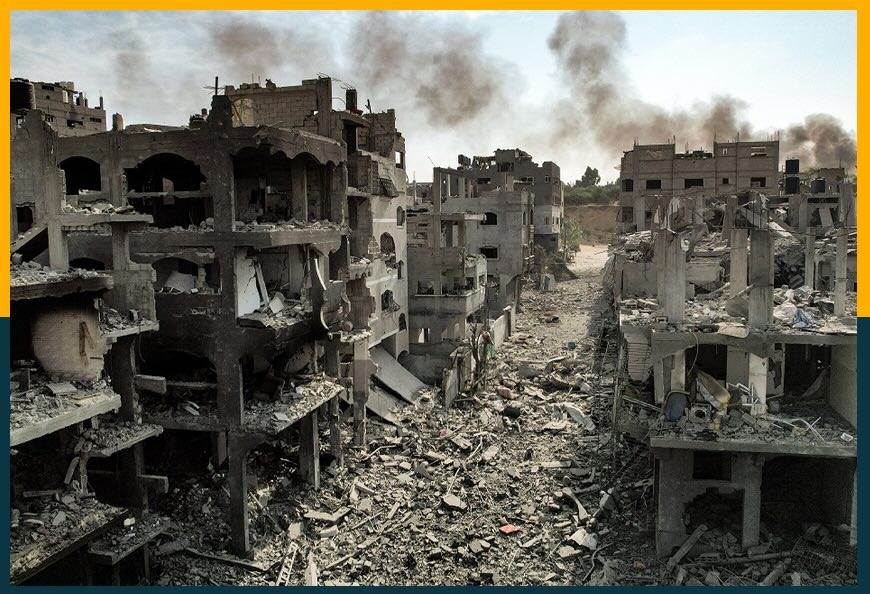
Authorities in Gaza estimate that the war has left behind more than 70 million tonnes of debris, while United Nations assessments place the figure closer to 55 million tonnes. This immense wreckage spans homes, public buildings and essential infrastructure. Hidden within the rubble are over 20,000 unexploded munitions, placing civilians, rescue workers and aid teams in constant danger.
Any attempt to rebuild is being profoundly obstructed. Under the continuing Israeli occupation and blockade, Gaza remains cut off from the heavy machinery and essential materials required for reconstruction. United Nations experts warn that removing the debris alone could take between twelve and fifteen years, while the cost of rebuilding is estimated to exceed 55 billion US dollars, an amount far beyond local capacity.
Damage assessments reveal that around two-thirds of Gaza’s infrastructure has been severely impacted. More than seventy per cent of residential homes are no longer habitable. Vital services such as electricity, access to clean water and sanitation have collapsed almost entirely, pushing daily life to the edge of survival.
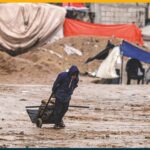
With no secure shelter, hundreds of thousands of displaced families are now living in tents or makeshift encampments on top of the ruins of their former homes. Environmental and health specialists warn that delaying rubble clearance will intensify long-term risks, as the debris contains toxic materials and unstable explosives. Without urgent intervention, future reconstruction or restoration of basic services will remain impossibly out of reach.
Gaza now stands at a decisive point in history. Either the international community responds with tangible legal, humanitarian and reconstruction commitments, or Gaza will remain an open wound on the conscience of the world. The bombardment may have ended, but the devastation endures, leaving behind a people still searching for the chance to begin again.