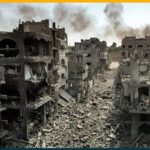
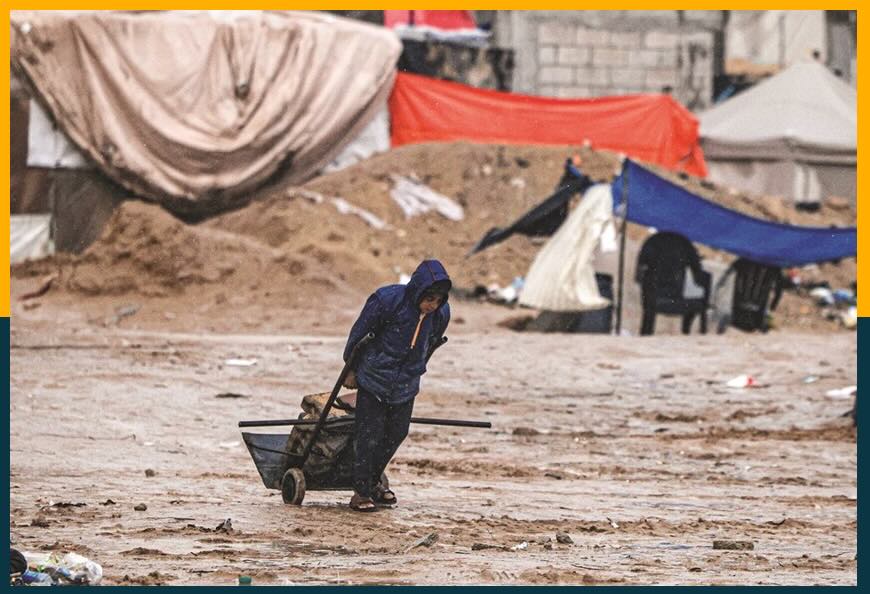
In Gaza, suffering does not end with destruction. Between worn out tents on crowded beaches and the rubble of homes flattened by bombardment, hundreds of thousands of displaced people await winter with growing fear. War has left them homeless, hunger devours their bodies, and now the cold looms on the horizon, a silent enemy yet to strike but close at hand.
Since the war began, most Gazans have been displaced multiple times. According to the UN Office for the Coordination of Humanitarian Affairs (OCHA), around 945,000 people are in urgent need of shelter to protect them from rain and cold. Yet only 23% of those needs have been met. This means more than half a million people will face winter in torn tents or under plastic sheets that cannot withstand the wind.
Displacement here is not simply a move from one place to another. It is a long journey from fear to fear, from one uncertainty to the next, with no guarantee of shelter when the first storm arrives.
Even before winter sets in, the first drops of rain are enough to expose the scale of the looming disaster. Tents crack, covers drown in water, and the ground turns to mud that swallows feet.
The UN and UNRWA have recently warned that nearly one million displaced people in Gaza face severe risk with winter approaching, due to shortages of warm clothing, blankets and heating supplies. Humanitarian organisations have already recorded cold related deaths among infants, making the coming months even more perilous unless aid arrives.
And if the cold is an imminent threat, hunger has already become a daily reality. Reports by the World Food Programme (WFP) and the Integrated Food Security Phase Classification (IPC) confirm that 96% of Gaza’s population suffers from severe food insecurity, with nearly half a million people enduring famine like conditions.
Hunger does not merely weaken resilience against war, it strips the body of resistance to cold and disease. In overcrowded shelters and a population deprived of adequate food, every missing meal means weaker bodies and less chance of surviving the winter.
Today, Gaza’s people stand trapped between three crushing walls:
War, which continues to destroy homes and infrastructure.
Hunger, which stalks every house and tent.
And winter, which has not yet begun but is approaching fast, threatening to make an already desperate humanitarian situation even darker.
These are not exaggerated fears but a reality confirmed by UN reports describing the humanitarian crisis in Gaza as “unprecedented,” worsening by the day.
UNICEF has also warned that health and nutrition indicators in Gaza have already surpassed famine thresholds. With winter approaching, the urgent need for shelter, warm clothing, blankets and safe humanitarian corridors is multiplying.
The greatest danger lies not in winter itself but in its arrival to a shattered, starving population without shelter or protection. Without urgent intervention, Gaza could face yet another tragedy piled upon its unending catastrophes.
Winter has not yet begun, but its chill is already in the air. In Gaza, many fear each coming night will be harsher than the last, and that the first rain could turn into disaster for bodies already ravaged by hunger and war.
Immediate action is a humanitarian necessity. Every hour of delay brings Gaza closer to a winter that may bear witness to hundreds more lives lost, unless the international community acts now.